

Shenandoah SOundcheck
Lilac War: Software Engineer by day, Folk Artist by Night
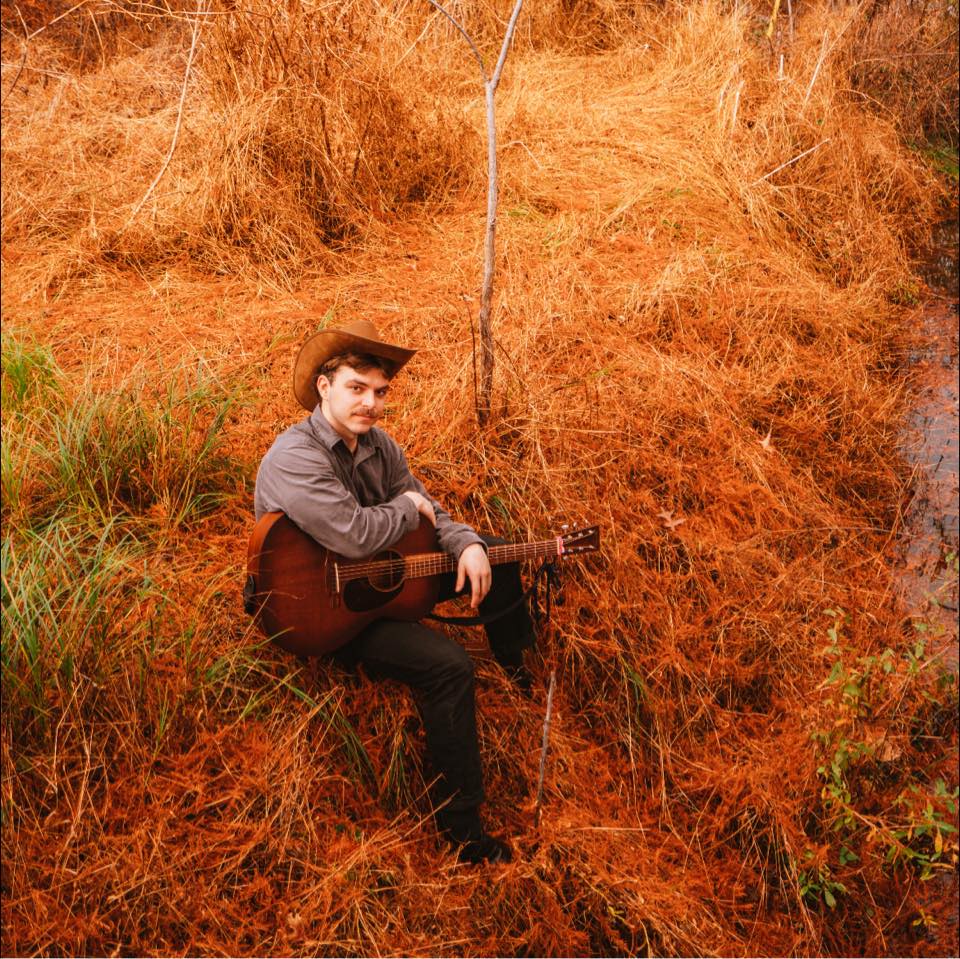
“The best part is taking an idea in your head and putting it out into the world for other people to hear.”
By Jake Dodohara, October 20th, 2023
Harmonizing the worlds of code and folk music, Lilac War is the embodiment of a multi-talented Shenandoah Valley alumni. Having attended school at JMU where he honed his skills as a software engineer, he’s not only crafted digital landscapes for media giants like NPR and the Associated Press but has also taken to the stage as a soulful folk singer. In this interview, we dive into the artistry of Lilac War.
How did your journey with music begin and when did your identity as a creative really start for you?
I would say [it started] in high school. I played in a lot of metal bands, playing a lot of shows and doing a lot of gigs. When I got to college, it was a little bit harder for me to play in a metal band because it relies on going to practice with a bunch of other people very often. JMU is about an hour away from Winchester, so that proved to be a complication
Because of that, I picked up the acoustic guitar and started songwriting my freshman year. Throughout the next three years, I collected bits and pieces of different local artists and different folk bands in the area. That kind of shaped my acoustic-y, folk sound.
If you were talking to a stranger on the street, what genre would you kind of say that your music lies in?
I like to tell people that my genre of music is lullaby folk. So folk music, but as if it were a lullaby. It’s a very soft spoken, light, sleepy type of folk genre. But at the end of the day, it’s just singer-songwriter folk music.
I’m a pretty soft spoken person in general, I don’t really have a loud voice and i like a lot of the finger-style playing similar to Hozier’s style of acoustic guitar playing. I think the combination creates a lullaby folk kind of sound.
As a singer-songwriter, what does your songwriting process look like?
I would say 90% of the time, I write the acoustic chords and instrumentation first, and then I’ll go back through and I’ll hum the melody along to it, and then I’ll sort of slide words into that melody and then kind of hone down the songwriting craft from there. Sometimes I do have lyrics that I’ve written that exist in their own echo chamber. And I’ll kind of apply that to something I’ve already written.
Is there any way that you’ve kind of studied and worked on your lyrical and melodic craft? Or is this just something that you know, comes to you intuitively?
No, I’ve never sat down and analyzed songwriting as a craft. It’s more or less happened naturally through listening to artists I like. Sometimes I write a song, and it really resonates with people. It’s got a really good storyline to it. And then sometimes I write songs that you might not know what this story is about, but the lyrics themselves are interesting to hear.
You’ve spent a lot of time in the Shenandoah Valley during your time as a student at JMU. What was that time like and how did it inform your artistry?
The biggest thing is support. Being at Harrisonburg and in the valley, I gained a lot of friends who really pushed me to continue being a musician and who pushed me to put my music out there and gave me the confidence that I needed to continuously make music.
For your latest EP “In Lieu of Youth,” what was your creative process like and where do you see yourself going next?
I had written for a while, but I think what it took was me sitting down and coming up with a theme and formalizing, almost like a brand for the EP. And that process took probably six months. It was all about finding the right sounds that I wanted to persist throughout every song of the EP.
As far as what I’ve got coming next, I actually am sending two songs off to get mastered here shortly. And I’ll be releasing those within the next three months. So the songs are different from the EP. The songs are just guitar and singing, which kind of goes back to where I started. Yeah. And it’s more of a more intense kind of feeling to the songs but I’m really excited to put them out.
What would you say? Is your favorite part of being, you know, a creative and an artist and what’s your least favorite part of navigating? Being creative and an artist?
I’d say the best part is taking an idea in your head and putting it out in the world for other people to see exactly how you’re feeling and what you’re thinking. Everybody has the ability to do it, but I think actually executing on it and putting something out there for people to listen to is a very special rewarding thing, you know.
My least favorite part is when releasing music and putting stuff out there becomes a chore in that. It starts to become brand focused. You start to think about marketing, almost like the whole business side of music. I shouldn’t feel pressure to release music or do music because at the end of the day, it’s just a hobby, and I’m not really, you know, not trying to become a millionaire off of my music.
Interview has been edited and condensed for clarity and length.
James Madison University
